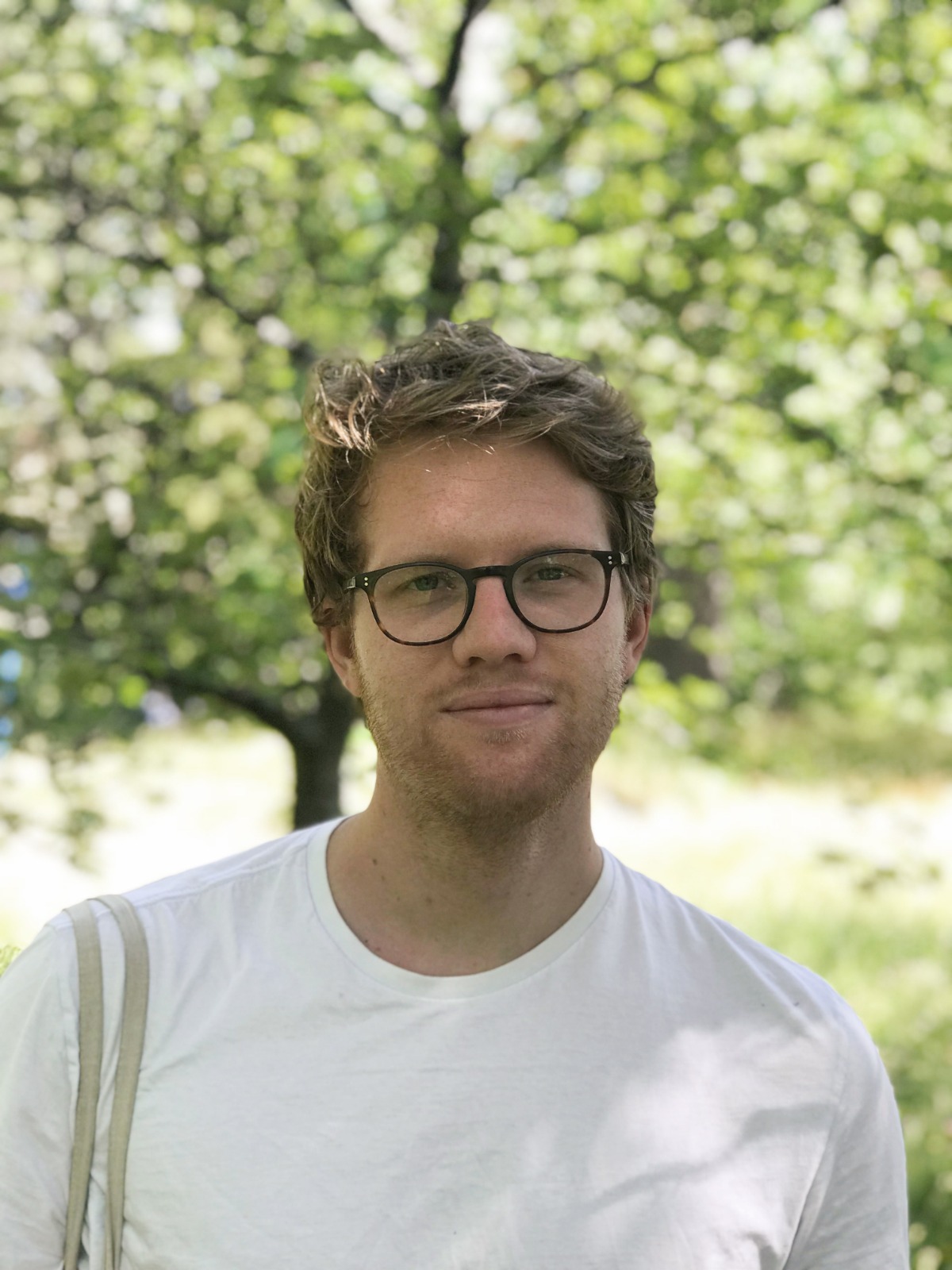
Andreas Almqvist
Interaction Designer & Researcher
Currently looking for work!
I am an early career interaction designer and researcher from Media Technology at KTH
Royal Institute of Technology currently looking for work within the field of Interaction Design.
I am very values-driven and find pleasure in working at a fundamental
level rather than a symptomatic level with band-aid. I like to question and deeply
reflect around assumptions of how relations between humans to humans and humans to
more-than-humans are and can be manifested and mediated through technology.
andreas.almqvist90@gmail.com | LinkedIn
“A world’s degree of liveability might well depend on the caring accomplished within it. In that sense, standing by the vital necessity of care means standing for sustainable and flourishing relations, not merely survivalist or instrumental ones.” María Puig de la Bellacasa [2]
The attention on the relational nature of our being in these quotes puts help me orient myself in my endeavours. It seems that the trouble of how relations are manifested is not necessarily solely due to what value system people hold, but also in how other external structures shape our behaviour. More concretely, an ethics of “apply the same standards to yourself as you do to others, if not harsher” is embraced in theory by many people, but rejected in practice in how services and products are offered based on a premise of primarily characterizing humans and more-than-humans as resources. As such, we largely relate to the world in ways of reductive instrumentalism as Homo Economicus.
I am seriously suspicious of strivings of productivity [3] and optimization for profit, where processes for change are carried out without an important extent of participation of dwellers. This kind of exploitative relations appears to be concealed of empathy and compassion through non-ecologically hierarchical perspectives and spatial distances. Through this, there is a neglect of the accumulated impacts of actions that are tearing humans and more-than-humans asunder in different ways.
I am curious to explore and to overlay these too common narratives by thinking about production of spaces, following Lefebvre's [7] and Hedman's thought [8]. We always find ourselves in a place; what do these places feel like, who produces it, with what means is it produced, for whom, and for what intentions? As we move around, there is a continuous thrownness (in the Heideggarian sense) in the relational contexts we find ourselves in. A mitigation of a common situated alienation from people and place that people might find themselves in appears to contribute to a valuable foundation for local, collective and coordinated action (not to mention aspects of wellbeing). I am curious to explore processes of how a sense of belonging and responsibility of a place can come to be through ongoing collaboration in creation and maintenance of a place. I am interested in public spaces. “[...] without a space where people share conversations, differences, and pleasures, it is difficult to imagine citizens linking their needs to political participation” [4].
María Puig de la Bellacasa acknowledge our interdependencies on earth as a condition; not a contract nor a moral ideal [5]. She insists that “care is therefore concomitant to the continuation of life for many living beings in more than human entanglements — not forced upon them by a moral order, and not necessarily a rewarding obligation”. In the necessity of care for “barely possible but absolutely necessary joint futures” [1], Bellacasa uses three dimensions of care to help us “keep close to the ambivalent terrains of care”: maintenance doings and work, affective engagement, and ethico-political involvement. They “are not necessarily equally distributed in all relational situations, nor do they sit together without tensions and contradictions” [5]. In this way, care is never neutral; it endorses certain worlds and refrain from others.
A perspective of care in living-with humans and more than humans can then possibly provide a relational sensitivity in approaching life on the damaged and continuously damaged earth, helping us live and design as if life depended on it. At large, I want to engage in efforts of imagining, creating and fostering “other relations, other possibilities of existence, namely other beings” [2], to reimagining our societies as naturecultures where we, in essence, to no longer separate ourselves from our contexts in human exceptionalism and individualism, but through care acknowledge and celebrate our interdependence, inseparability and intimacy [1,6]. How can we structure our naturecultures by addressing such value-tensions between idealised and realised actions? How can relations of care become a larger part of the social structures and practices than contemporary relations of instrumentality? These are questions that I have started to explore and want to explore further.